
An arcade escape room is a compact, pay-to-play puzzle attraction designed for short, self-operated sessions. It uses the physical theming, story and hands-on puzzles associated with an escape room, but follows the operating flow of an arcade game. Players pay or scan, enter the unit, complete a timed challenge and leave while the system prepares itself for the next session.
Escape Arcade is Intelligent Entertainment's version of this format. Its first theme, The Elevator, will make its world premiere at IAAPA Expo Europe 2026 in London. The game is designed for two players, lasts five minutes, includes two game modes and runs without a dedicated game master.
How an arcade escape room works
A conventional escape room normally occupies a dedicated room and runs as a scheduled group experience. An arcade escape room shortens that journey and packages it as an individual attraction within a wider venue.
- Players pay through the venue's connected card, coin, token or NFC system.
- Two players enter the cabinet and select one of the available game modes.
- The operating system manages the timer, sound, lighting and puzzle sequence during the five-minute session.
- When the game ends, the unit resets automatically and becomes ready for the next players.
This flow allows an FEC or arcade to sell short escape-game sessions alongside its existing activities without assigning an employee to start, guide and reset every playthrough.
The Elevator is the first Escape Arcade theme
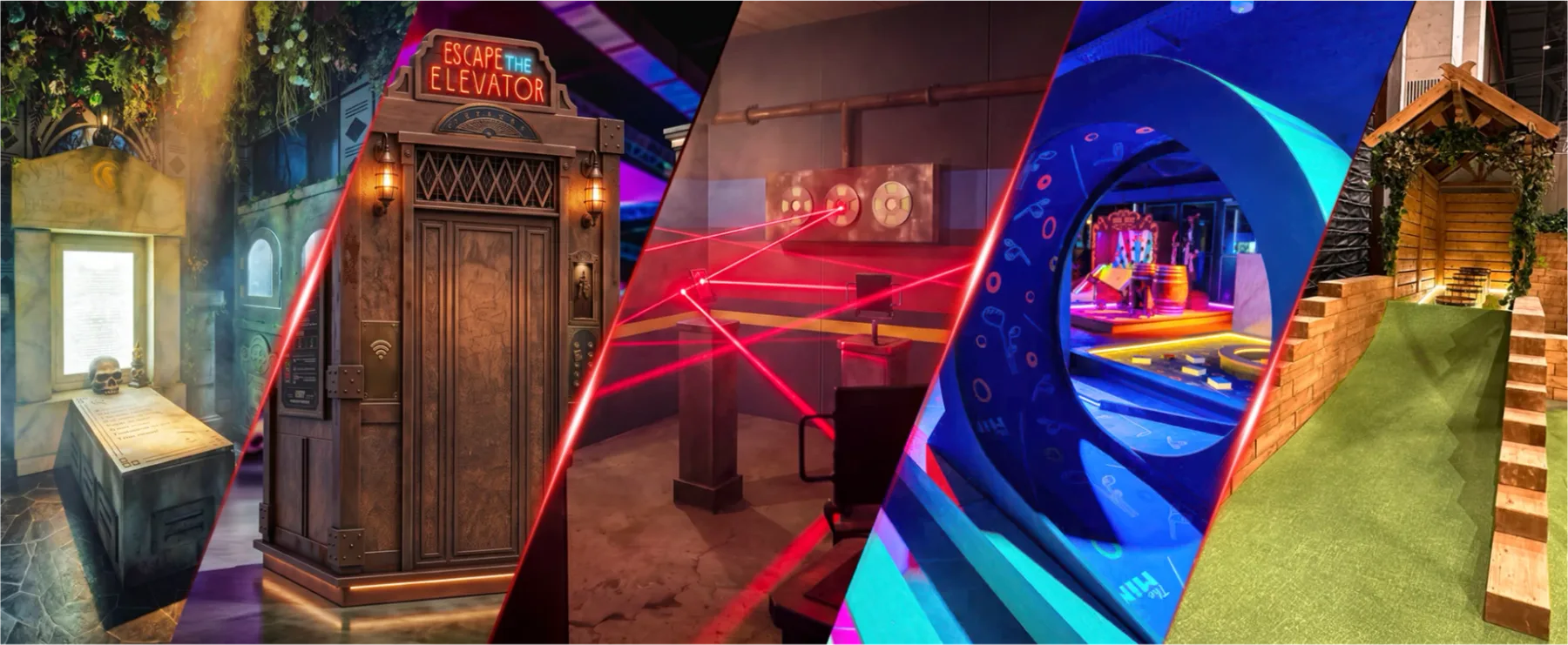
The Elevator places players inside a detailed vintage lift. Interactive props, directional audio, lighting effects and physical puzzle mechanisms build the atmosphere without requiring a headset or handheld device. The two game modes use the same themed environment in different ways, giving players a reason to return without increasing the cabinet's footprint.
The game is intentionally short. Five minutes is long enough to create a complete challenge with a clear beginning and ending, while remaining suitable for walk-in and impulse play. Actual revenue and throughput will depend on the venue's opening hours, pricing, demand, placement and payment system.
Designed for venues with limited space
The cabinet is approximately 1.5 metres wide and 1.5 metres deep, giving it a physical footprint of about 2.25 m². The final placement must also allow safe entry, exit, access and any clearances required by the venue.
This size allows operators to consider areas that cannot accommodate a conventional attraction, such as an arcade edge, bowling concourse, cinema lobby, reception area or underused section of an existing entertainment floor. Placement should never obstruct an emergency route or required circulation space.
Escape Arcade arrives pre-built on a heavy-duty steel pallet base. A suitable forklift can move the cabinet during installation or later repositioning. This gives multi-activity and multi-site operators more flexibility when layouts or traffic patterns change.
No dedicated game master and automatic reset
In this format, unattended means that no employee is assigned to operate every session. The software controls the timer, lighting, sound and game sequence, while the cabinet resets itself after the players leave. Tethered props and commercial-grade components reduce the manual work required between sessions.
The term does not remove the operator's normal responsibilities. The venue still needs general staff presence, routine inspections, safe access, cleaning and a process for helping guests when necessary. This distinction matters when comparing genuinely self-operated attractions with games that still require a hidden manual reset.
Payment and operating integration
Escape Arcade is designed to connect with the payment method already used by the host venue. The cabinet can be prepared for card readers, coins, tokens or NFC access, reducing the need for a separate transaction process.
The five-minute game cycle also makes the format easier to combine with arcade play, bowling, cinema visits or other bookable activities. Players can understand the offer quickly and begin without a lengthy briefing.
Two modes create replay value
The first Escape Arcade unit includes two game modes. Each mode changes the challenge within the same physical environment, so a player who completes The Elevator once still has another experience available. This is particularly useful in venues that depend on repeat local visits rather than one-time tourist traffic.
Replayability should still be measured in practice. Operators should monitor first plays, repeat purchases, completion rates and the performance of different cabinet locations rather than assuming that an additional mode will automatically produce a specific return.
Built by an experienced escape-room team
Intelligent Entertainment developed Escape Arcade through the team behind The MindTrap escape rooms. IE has delivered more than 300 escape rooms and applies the same experience in game design, electronics, physical production and technical support to the compact format.
The themed cabinet, puzzle components, electronics and operating system are assembled and tested through IE's in-house production facilities in Thessaloniki, Greece. Cloud-connected software supports remote diagnostics and technical troubleshooting after delivery.
Where Escape Arcade fits
The format is designed for operators who need a short escape attraction that can join an existing activity mix:
- Family entertainment centres and arcades looking for a premium pay-to-play game.
- Bowling, cinema and multi-activity venues with smaller areas available between major attractions.
- Shopping centres and leisure destinations seeking compact indoor entertainment.
- Escape-room operators that want an additional lobby or reception-area experience.
- Hotels and tourism venues that need a self-contained game for guests.
- Multi-site groups looking for a standardised unit that can be deployed across several locations.
See Escape Arcade at IAAPA Expo Europe
The Elevator will make its world premiere at ExCeL London from 22 to 24 September 2026. Visitors can see the complete payment-to-reset journey at Intelligent Entertainment Booth S4922 and book a live demonstration.